

Standard Kitchen Counter Height: A Complete Guide on the Right Fit
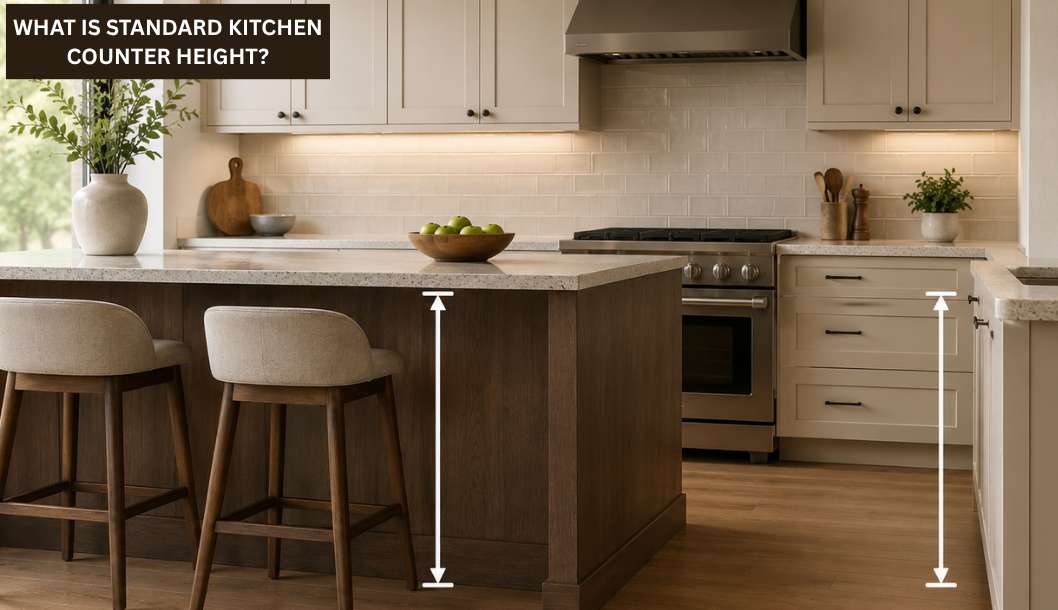
The standard kitchen counter height plays an important role in how comfortably a kitchen supports daily routines. From food preparation to extended cooking sessions, the right kitchen counter height helps maintain better posture, smoother movement, and reduced physical strain. With Simpolo Tiles & Bathware, kitchen planning is guided by a clear understanding of proportions, materials, and everyday use, complemented by durable kitchen tiles to ensure that kitchens remain balanced, practical, and easy to work in over time.
What is the Standard Kitchen Counter Height?
The widely accepted standard kitchen counter height is 36 inches (91.4 cm), measured from the finished floor level to the top of the countertop. This measurement suits average adult height and allows common kitchen tasks to be performed without excessive bending or raised shoulders.
Over time, cabinet systems, appliance dimensions, and modular kitchen designs have aligned around this height. As a result, 36 inches has become the reference point for most residential kitchens, offering consistency during installation and compatibility across layouts.
Standard Kitchen Counter Height Measurements at a Glance
Understanding how the final height is achieved is helpful when planning a new kitchen or a renovation.
- Overall counter height: 36 inches (91.4 cm).
- Base cabinet height: 34.5 inches (87.6 cm).
- Typical countertop thickness: 1.25 to 1.5 inches (3.2 to 3.8 cm).
- Toe kick height: 3.5 to 4 inches (8.9 to 10.2 cm).
- Recommended seating overhang: 12 inches (30.5 cm).
For kitchens designed with accessibility in mind, ADA-compliant counter heights generally range between 28 and 34 inches (71 to 86 cm), depending on user requirements.
These measurements ensure the counter sits at a comfortable working level while accommodating cabinetry, floor tiles, and appliances.
Also Read: Standard Kitchen Dimensions Guide for Modern Homes
How Counter Height Affects Ergonomics and Comfort?
Counter height influences posture, reach, and ease of movement during everyday kitchen tasks. A practical guideline is to keep the counter 2 to 4 inches below the user’s elbow height when standing, allowing the arms to work comfortably without strain.
- Counters set too low often lead to forward bending, increasing pressure on the lower back.
- Counters set too high can cause raised shoulders and wrist fatigue during repetitive tasks.
- A well-proportioned kitchen counter height supports upright posture and controlled movement.
At standard working heights of 34 to 36 inches, the countertop becomes one of the most frequently used elements in the kitchen. Our Alchimia collection is designed for these applications, supporting consistent performance during daily preparation, appliance use, and regular cleaning.
Balanced counter height combined with appropriate material selection helps kitchens remain comfortable and functional over time.
Counter Height for Tall Users (6 ft and Above)
For taller individuals, the standard kitchen counter height may feel slightly low during prolonged use. Heights between 38 and 42 inches (96.5 to 106.7 cm) often provide better comfort.
Common adjustments include:
- Taller base cabinets.
- Increased countertop thickness.
- Raised preparation zones for frequent tasks can also be visually balanced with seamless big tiles in contemporary kitchens.
These changes help reduce bending and support a more relaxed working posture.
Counter Height for Shorter Users (Under 5 ft 4 in)
For shorter users, a 36-inch counter height can feel high, especially during tasks that require downward pressure. A range of 32 to 34 inches (81 to 86 cm) is often more suitable.
Adaptation options include:
- Lowered prep counters within the same kitchen.
- Reduced cabinet height in selected work zones.
- Pull-out work boards for flexible use.
Such solutions improve control while maintaining overall layout consistency, particularly in kitchens designed with coordinated wood tiles and neutral finishes.
Kitchen Counter Height Compared with Bar and Island Heights
Many contemporary kitchens include multiple counter levels to support different activities.
- Standard kitchen counters: 36 inches, designed for cooking and preparation.
- Bar-height counters: 42 inches (106.7 cm), intended for standing use and bar seating.
- Kitchen islands: Commonly match standard counter height, though some designs include a raised seating section finished with glossy tiles for a refined appearance.
Seating comfort depends on aligning the stool height with the counter level. Adequate knee clearance and appropriate overhang depth are particularly important for islands used daily.
Also Read: Standard Kitchen Slab Dimensions
Tips for Choosing the Right Kitchen Counter Height
Selecting the right kitchen counter height involves balancing standard measurements with real-life usage.
- Measure the elbow height of primary users and plan counters 2 to 4 inches below.
- Consider all regular users in shared households.
- Account for finished flooring thickness during planning.
- Check appliance dimensions to avoid alignment issues.
- Factor in long-term accessibility requirements.
- Use split-level counters where different tasks require different heights.
Careful planning at this stage helps kitchens remain comfortable and practical in the long run.
Also Read: Top 10 Black and White Kitchen Design Ideas
Conclusion
The standard kitchen counter height of 36 inches continues to provide a dependable foundation for most homes, supporting everyday cooking and preparation with ease. At the same time, kitchen counter height can be adjusted to suit individual needs, whether for ergonomics, accessibility, or specific cooking habits. At Simpolo Tiles & Bathware, this balance between measurement, material choice, and daily use guides kitchen planning, helping create spaces that feel comfortable, well-proportioned, and functional over time.



 Toll Free: +91 7228922222
 +917433978200
 customercare@simpolo.com
 1800-233-2223