

Wooden Partition Design Ideas for Living Rooms & Hall
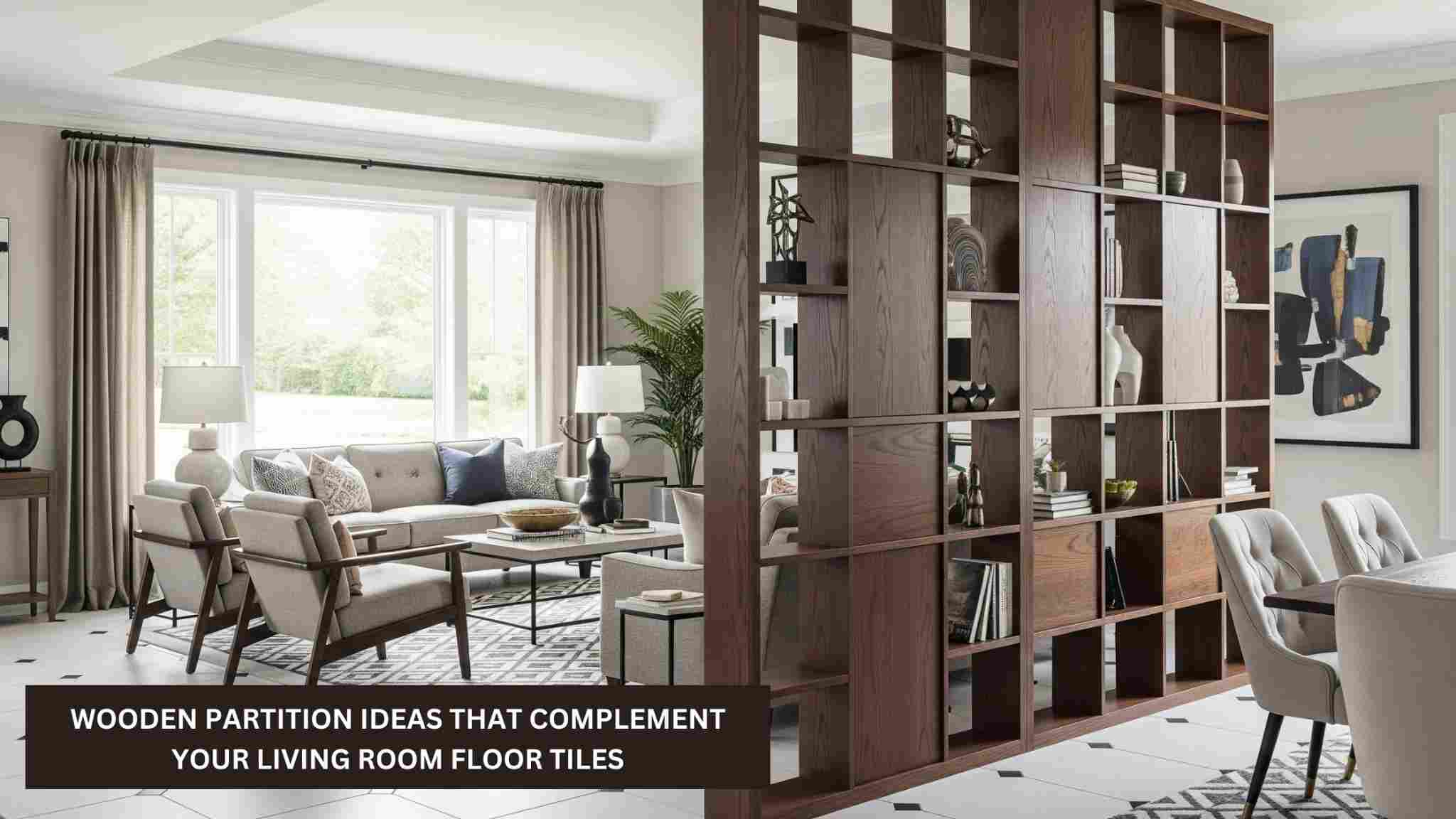
A well-executed wood partition design is a key tool in contemporary architectural planning, offering a versatile solution for defining and enhancing interior spaces. This expert guide will explore the principles and practical applications of using wood partition design elements to introduce privacy, control light, and improve flow within a home. Unlike permanent walls, a partition offers a flexible, aesthetic means to divide a large area, such as segregating a workspace from a relaxation zone. Understanding the differences between concepts, from simple wood partition design concepts to more modern wood partition designs, is key to selecting the right element that complements your home’s overall aesthetic and functional needs.
Types of Wood Partition Design for Living Rooms
When considering wooden partition designs between living dining spaces or an open-plan area, the design choice is critical:
- Slatted/Louvre Screens (Modern Wood Partition Design): These vertical or horizontal slats offer partial visibility, maintaining an airy feel while subtly dividing the room. They are expertly used for filtering light and adding a contemporary look.
- Panel Partitions (Simple Wood Partition Design): Solid or framed panels that offer maximum visual privacy. These can be fixed or sliding to allow for complete open-space conversion when needed, providing maximum design flexibility.
- Modular Units: Partitions that double as shelving or storage, providing functional utility along with room separation. This is ideal for maximizing storage in smaller apartments.
Popular Wooden Partition Design Ideas with Floor Tiles
There’s no single wooden partition design for living room spaces that works in every home. It’s about matching the style of your floor tiles with the right partition finish, pattern, and even movement.
Slatted and Louvre Screens for Wood Partition Design
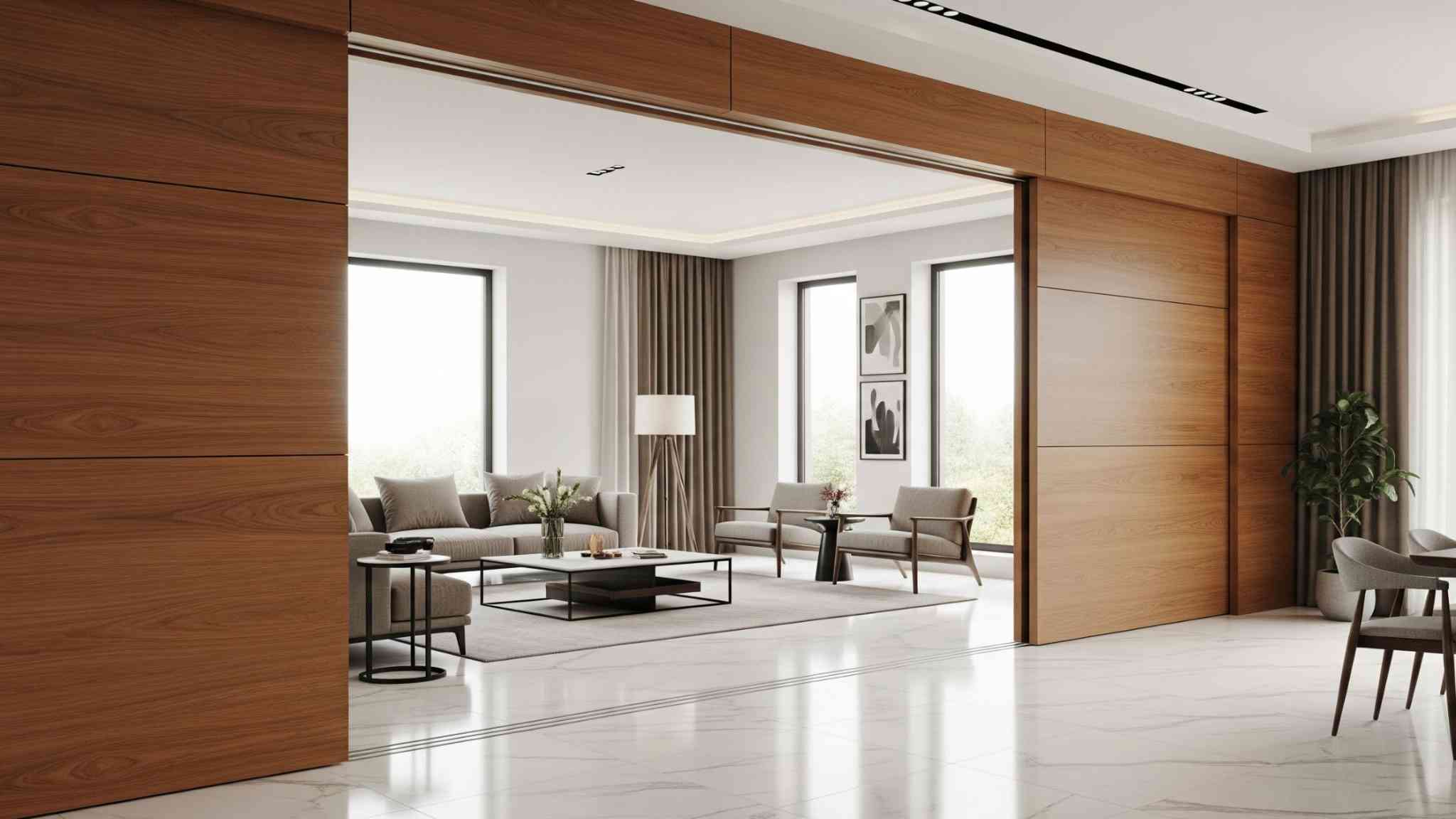
A wooden partition wall for the living room is ideal for open-plan homes. Sliding designs glide smoothly to close off areas when needed and tuck away for a seamless look. Pair them with large-format floor or wall tiles like our Marmorica collection, and the marble finish adds a touch of luxury. In contrast, uninterrupted tile lines make the space feel larger and beautifully balanced, complemented by warm wood tones.
Folding Wooden Partition Design for Flexible Spaces
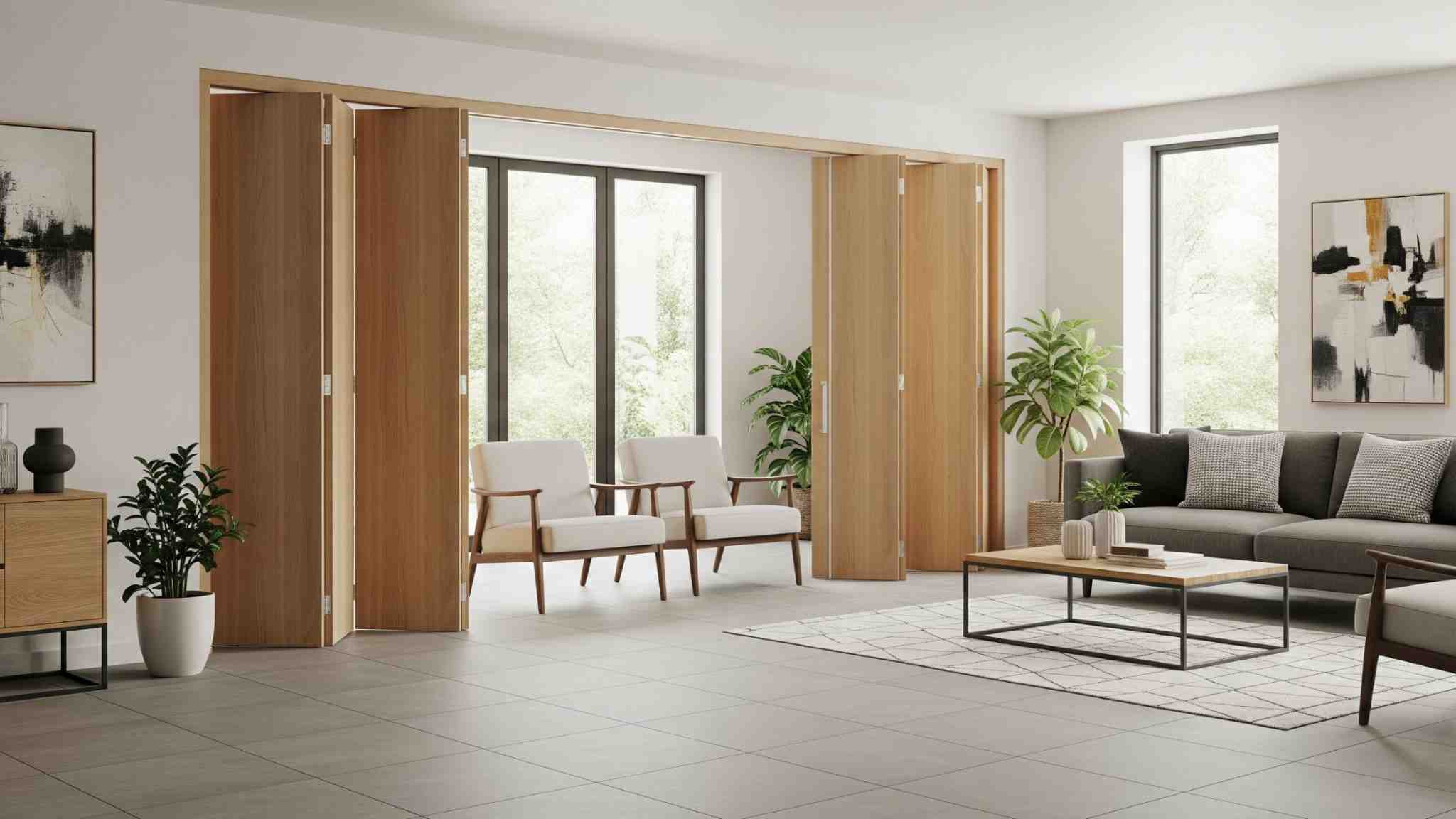
For homes that need flexibility, folding partitions are a smart choice. Their accordion-like panels open wide or fold neatly without taking much space. They look especially good with matte or textured tile surfaces, such as our Impatto collection, which gives a soft yet durable base that balances the visual weight of the wooden frames.
Traditional Wooden Jaali Partition Designs
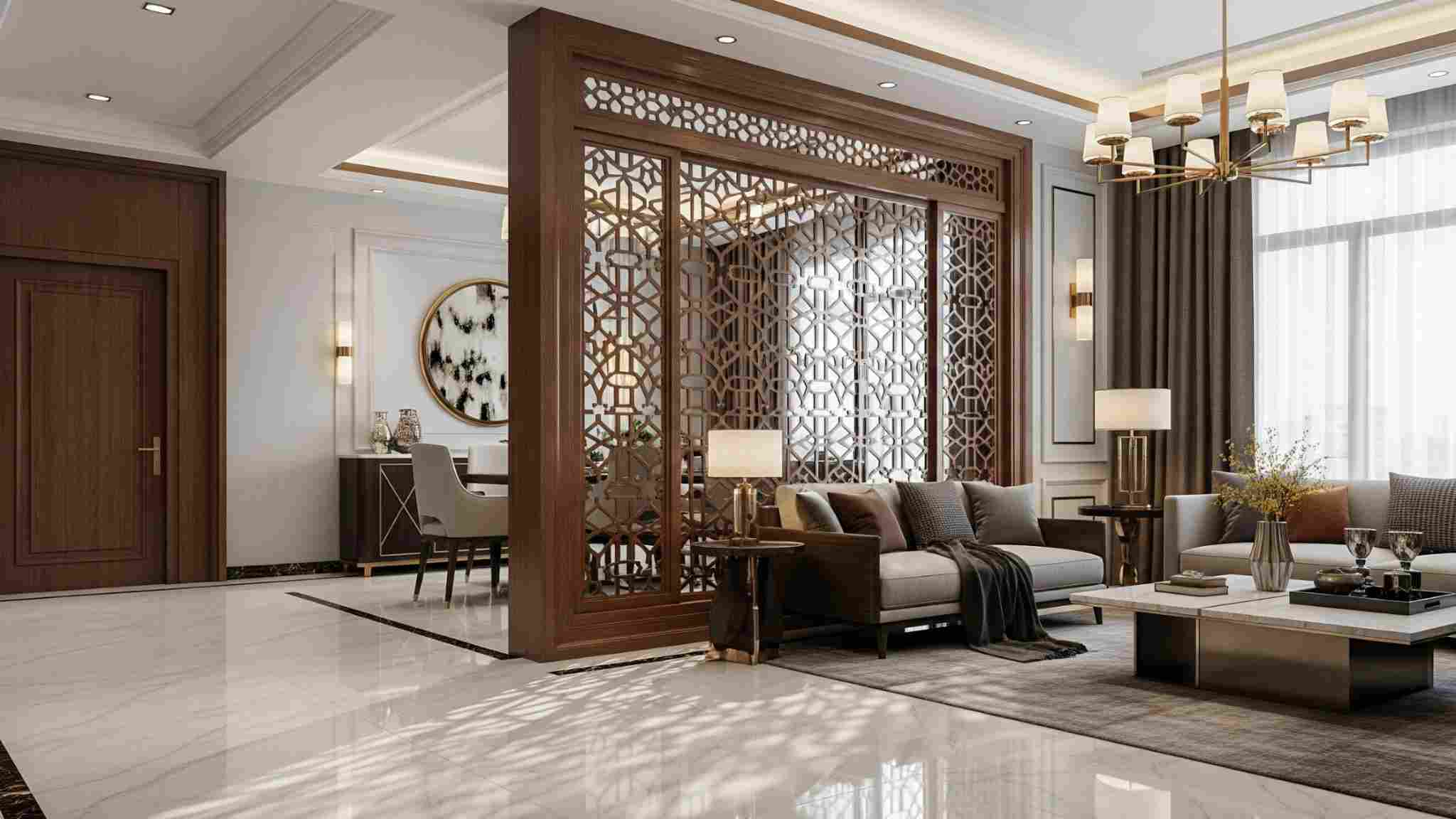
Jaali-style partitions bring in traditional charm with intricate cut-outs. These patterns work beautifully with glossy marble or satin-finished tiles. We’ve paired them with our Impero collection in living rooms, where the polished surface reflects light through the jaali patterns, creating subtle, moving shadows on the floor.
Wood Partition Design with Built-In Storage Units
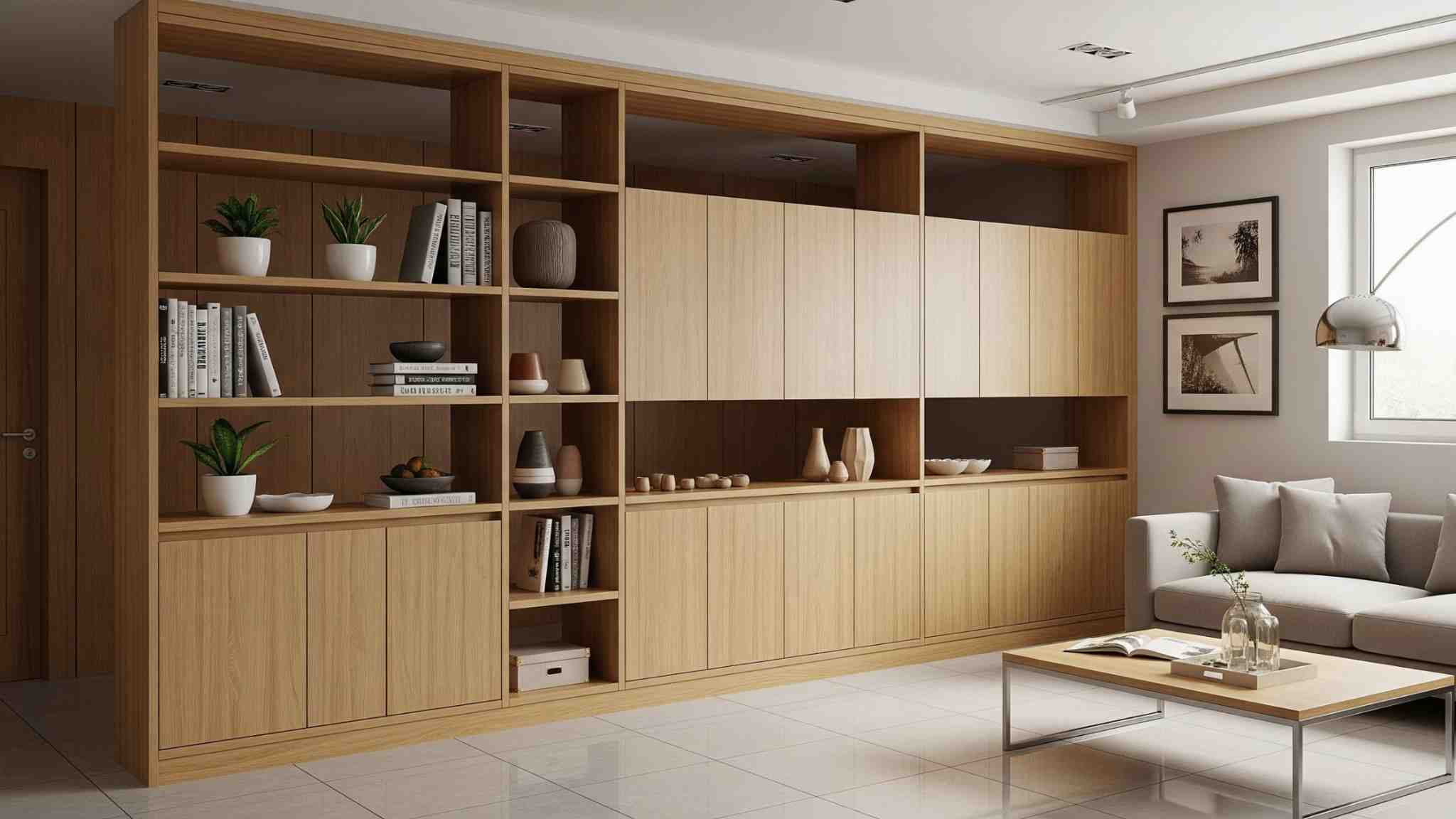
In compact living rooms, a wooden partition design with built-in shelves or cabinets serves as both storage and decor. The clean, functional lines go hand-in-hand with vitrified or ceramic tiles. Our Altagloss collection, with its sleek reflective finish, helps make small spaces feel open, even when the partition includes storage units.
Related Post :14+ Half Wall Tile Design Ideas for a Stylish Living Room
Glass and Wood Combination Partition Design
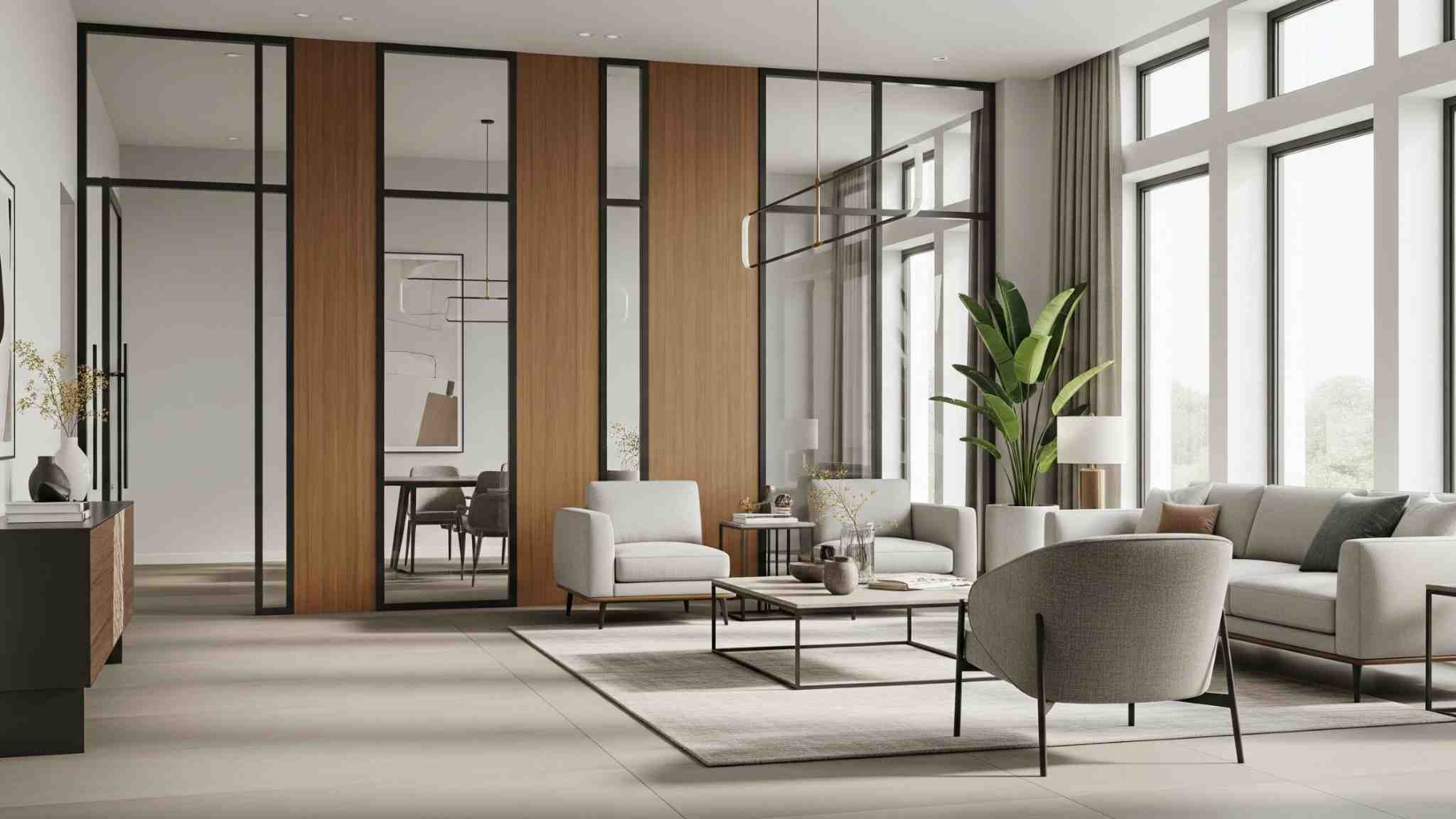
A modern option, glass-and-wood partitions keep the room bright while still creating separation. They work best with neutral-toned tiles, such as those in our Ricco collection, where the calm base colour allows the wood-and-glass structure to stand out without overpowering the room.
Rustic Plank-Style Wooden Partition Design
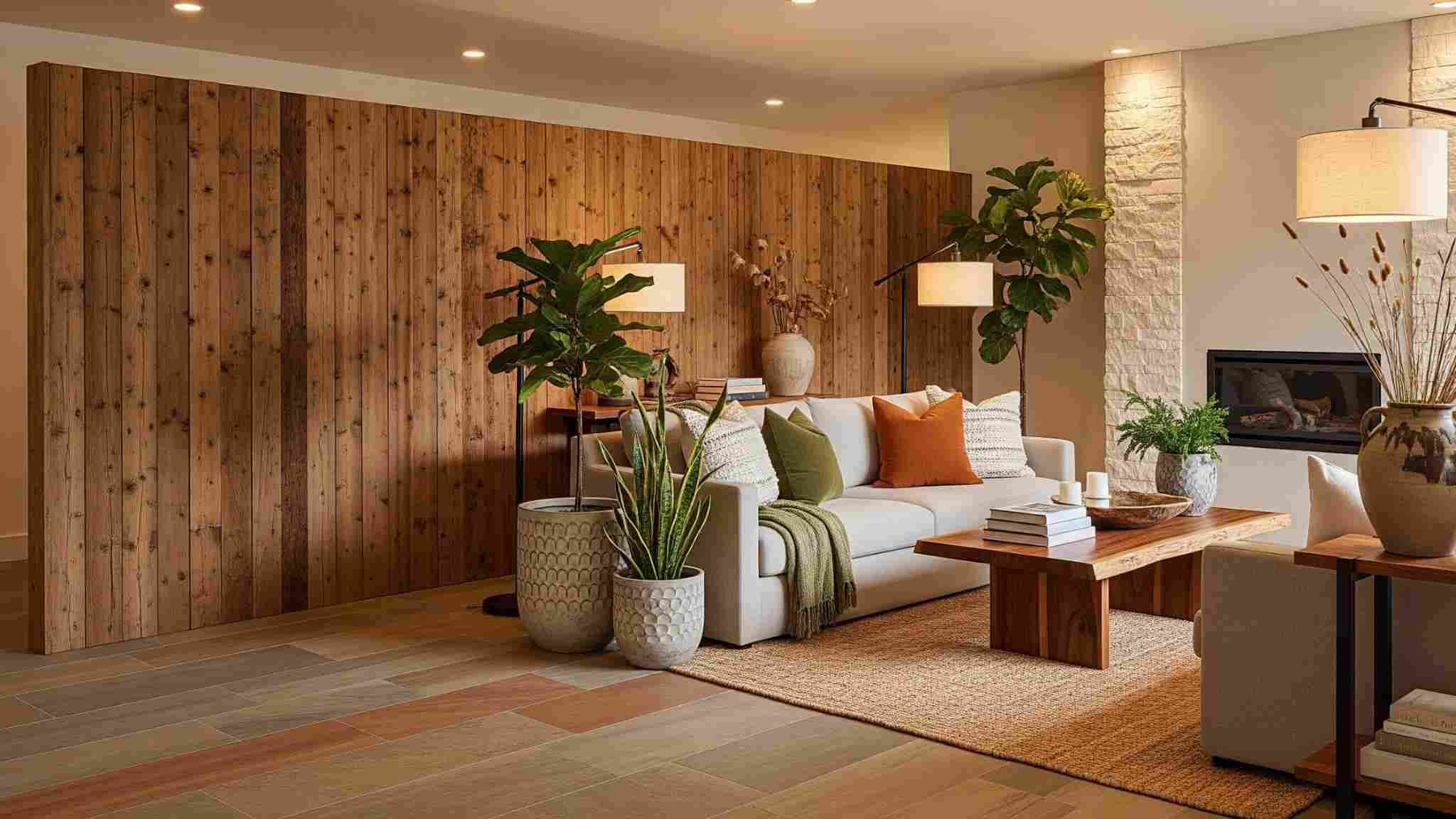
If you love a more relaxed vibe, wide plank wooden dividers are a great choice. They work perfectly with wood-look or earthy-toned porcelain tiles, like those from our Forza collection. The natural tones in both elements complement each other, creating a warm, lived-in feel.
Benefits of Wood Partition Design for Living Room Spaces
Open-plan living is popular, but it often necessitates defining functional zones without sacrificing the feeling of space. A wood partition design for living room areas is often the ideal solution, providing a visual break between spaces like a living room and dining area.
- Acoustic Buffer: While not soundproof, a partition can help absorb and subtly diffuse ambient sound, creating a quieter environment on either side.
- Light Control: Designs can be chosen to either filter and transmit light (like slatted screens) or provide full visual separation, depending on the material and spacing.
- Visual Interest: A well-crafted partition acts as a design feature, adding texture, warmth, and a focal point to the room, elevating the overall interior aesthetic
Why Choose Wooden Partitions for Living Rooms?
The living room wood partition design has a timeless appeal. They add natural texture, warmth, and character that blend with almost any style of living room. The grain of wood works well with both glossy and matte tile finishes. If your living room floor has a marble look, like our Marmorica collection, the wood can soften its formality. On the other hand, with wood-look tiles, a wooden partition adds depth to the organic feel.
Wooden partitions are also incredibly versatile. Whether you want to block views, define spaces, or just add a visual feature, the right wooden partition for hall or living room spaces makes it easy without heavy construction work.
Where to Use Wooden Partition Designs in Living Rooms?
Placement of a partition in a room is the key. Many homes use them to separate the seating area from the dining space. This works beautifully if you repeat certain design elements, for example, using the same grout tone in your floor tiles and the stain colour of your wood partition.
You can opt for a wooden partition for the living room, which can create a quiet space with minimal impact. We, at Simpolo Tiles and Bathware, have also designed spaces where a partition sits behind the sofa, creating a walkway while still keeping the living area cosy.
Living room tile choice plays a big role here, too. For example, our Double Charge collection, with its firm, polished surface, can run seamlessly across both areas, the partition providing just enough definition without visually chopping up the floor.
Choosing the Right Wooden Partition for Your Floor Tiles
Selecting the right pairing requires some thought. Dark wood tones pair beautifully with light tiles, especially those featuring marble or satin finishes. If your tiles are patterned or have strong veining, go for a cleaner partition style so the two elements don’t compete.
Texture matching works well, too. For example, the fine texture of our Armonia collection in a warm beige grout can be echoed in a light oak partition for a harmonious look. For contrast, a straight-lined walnut frame looks sharp against a high-gloss tile, such as Altagloss.
Wood Partition Installation and Maintenance Tips
- Fixed partitions are ideal for creating permanent zones.
- Mobile wooden partitions are ideal for creating flexible layouts.
- Installation over tiled flooring is simple but needs careful alignment between the wood base and tiles to prevent gaps or uneven lines.
- For maintenance:
- Dust wooden panels regularly.
- Wipe with a slightly moist cloth.
- Check tile-floor junctions for trapped moisture.
- In humid areas, seal the wood to avoid warping, especially on vitrified or glossy tiles.
Related Post :10+ Living Room Partition Design Ideas for Modern Homes
FAQs on Wooden Partition Design
Q1: What type of wooden partition suits a living room with marble tiles?
For living rooms with marble tiles, sliding wooden partitions and jaali panels are excellent choices. Sliding partitions glide smoothly and complement the marble’s luxury with warmth, while maintaining an open feel.
Q2: Can wooden partitions be installed directly over tiled flooring?
Yes, wooden partitions can be installed directly over tiled flooring, but they require precision during installation. The key is ensuring the interface between the wood base and tiles is seamless to avoid gaps, uneven edges, or misalignment.
Q3: Are wooden partitions suitable for small living rooms?
Yes, wooden partitions are very suitable for small living rooms, especially when designed with smart functionality. Folding partitions or sliding panels save space while maintaining an open-plan feel, making the room appear larger.
Q4: How do I maintain the finish of my wooden partition?
Maintaining a wooden partition is simple with a few regular habits. Dust the panels frequently to prevent dirt buildup, and wipe them with a slightly moist cloth to keep the finish fresh.
Q5: Is a wood partition permanent?
A: Not necessarily. Partitions can be fixed, sliding, or foldable. Fixed designs offer stability, but many wood partition designs for room concepts are non-load-bearing and easier to dismantle than a traditional wall. It is crucial to know the difference before installation.
Q6: How do I maintain a wooden partition?
A: Maintenance depends on the material. Solid wood requires occasional polishing and sealing to protect the finish. Laminate/veneer surfaces only need regular cleaning with a damp cloth and mild, non-abrasive solution.
Q7: Can I use wood-look tiles instead of actual wood for a partition?
A: While challenging to execute on a movable structure, wood-look tiles can be used as cladding on a permanent, structurally-sound wall to create a similar aesthetic effect with superior durability, zero maintenance, and water resistance. This is an excellent alternative for areas exposed to humidity.


 Toll Free: +91 7228922222
 +917433978200
 customercare@simpolo.com
 1800-233-2223