

Staircase Direction as Per Vastu for Positive Energy Flow
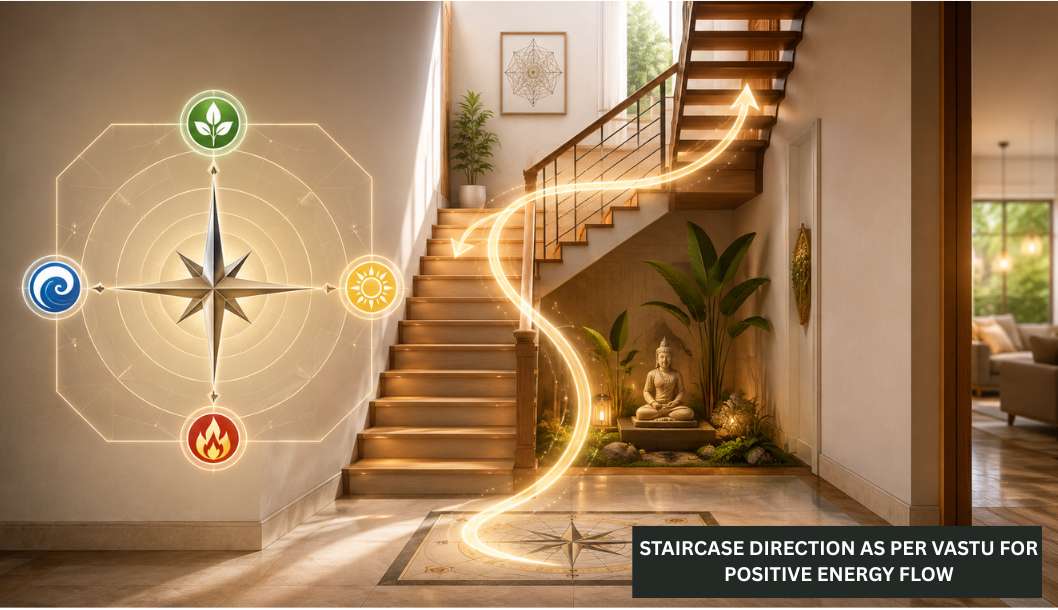
A staircase is more than just a structural element in a home. According to Vastu Shastra, it plays an important role in guiding the flow of energy or Prana throughout the house. The placement, direction, design, and number of steps can influence harmony, stability, and positivity within the space. Choosing the right staircase as per Vastu principles is believed to support wellbeing, prosperity, and peace. Understanding the ideal staircase direction as per Vastu can also help homeowners avoid energy imbalances while creating a functional and visually appealing home with stylish solutions.
Why is Staircase Direction Important as per Vastu?
In Vastu Shastra, every part of a home influences the movement of energy. A staircase connects different levels of the house, making it an important architectural feature. The placement of a staircase as per Vastu is believed to impact financial growth, health, relationships, and overall harmony.
According to Vastu beliefs, an incorrectly positioned staircase may obstruct positive energy flow and create imbalance within the home. On the other hand, a staircase built in the correct direction is believed to support stability, emotional balance, and prosperity. This is why homeowners and architects often consider Vastu guidelines during planning and construction.
Ideal Staircase Direction as per Vastu
Selecting the right staircase direction as per Vastu is one of the most important aspects of staircase planning. Vastu experts generally recommend placing staircases in the South, West, or South-West zones of the home.
|
Direction |
Vastu Status |
Ruling Element |
Effect as per Vastu |
|
South |
Highly Auspicious |
Fire / Yama |
Promotes stability, wealth, and positive energy |
|
South-West |
Auspicious |
Earth |
Supports strength, longevity, and family harmony |
|
West |
Acceptable |
Water |
Neutral; acceptable if South/SW not possible |
|
North |
Inauspicious |
Water / Kuber |
Blocks wealth energy; may cause financial issues |
|
East |
Inauspicious |
Air / Sun |
Disturbs health energy; avoid if possible |
|
North-East (Ishaan) |
Strictly Avoid |
Space / Divine |
Most inauspicious blocks divine energy; causes illness and losses |
Also Read: Colour for Living Room as per Vastu: Harmonise Energy & Style
Vastu Rules for Staircase Placement
Along with the direction, Vastu Shastra also highlights several important guidelines for staircase design and placement. These recommendations are believed to support a balanced flow of energy while improving the functionality and visual appeal of the space.
- Staircases should ideally ascend in a clockwise direction.
- The total number of steps is generally preferred to be odd, such as 9, 11, 15, 17, 21, or 27.
- Step counts ending in zero, such as 10, 20, or 30, are usually avoided.
- A staircase should not be constructed directly above or below a puja room.
- Avoid placing staircases in the centre of the home, also known as the Brahmasthan, as this area is associated with openness and balance.
- The staircase should not directly face the main entrance, as it may affect the smooth flow of energy indoors.
- Proper lighting and ventilation around the staircase area can help create a more open and welcoming environment.
- Heavy storage spaces beneath staircases are generally discouraged.
- Uniform riser height and tread width are important for both comfort and safety.
- Damaged, uneven, or broken steps should be repaired promptly to avoid negative energy. Simpolo Tiles and Bathware’s durable staircase tiles offer scratch-resistant and high-strength surfaces that prevent the wear and tear that leads to Vastu defects.
To complement a well-planned staircase design, Simpolo Tiles & Bathware offers premium staircase tiles that combine durability with elegant aesthetics. With innovative surfaces, refined finishes, and versatile designs, the collection helps create staircases that are visually striking, easy to maintain, and suitable for modern interiors.
Number of Steps in Staircase as per Vastu
The number of staircase steps is considered an important element in Vastu Shastra. Odd numbers such as 9, 11, 15, 17, and 21 are generally preferred, as they are believed to support a balanced flow of energy within the home. Another commonly followed guideline suggests that when the total number of steps is divided by 3, the remainder should ideally be 1 or 2. For instance, 11 and 17 follow this pattern. Staircases ending in multiples of ten are often avoided, as they are traditionally believed to disrupt harmony and positive energy flow in the space.
Also Read: 12 Best Mirror Directions as Per Vastu for Home & Positivity
Staircase Shape & Design Rules as per Vastu
The shape and design of a staircase play an important role in maintaining balance, functionality, and positive energy flow within the home.
- Straight staircases are generally considered ideal in Vastu Shastra.
- Spiral staircases should only be placed in suitable directions and avoided in the North-East zone.
- Broken, damaged, or incomplete staircases are considered inauspicious.
- Open risers are often avoided, as they may symbolise instability.
- Railings on both sides are preferred for added safety and visual balance.
- Proper natural light and ventilation help create a more open and welcoming staircase area.
- Dark or cluttered staircases should be avoided to maintain a clean and harmonious look.
For a refined and modern staircase design, we offer stylish tile finishes and coordinated wall tile solutions that enhance both aesthetics and functionality.
Also Read: 10 Best Kitchen Positions as per Vastu for Health & Positivity
Conclusion
Incorporating a staircase as per Vastu into home planning can help create a space that feels balanced, functional, and visually harmonious. From staircase direction and step count to layout and design, every element plays a role in shaping the overall flow of the interiors. Thoughtfully selected staircase tiles and coordinated wall finishes can further enhance the aesthetics and practicality of modern living spaces.


 Toll Free: +91 7228922222
 +917433978200
 customercare@simpolo.com
 1800-233-2223